







Plastic mold steel is a specialized steel used for manufacturing plastic molds, and its properties directly affect the quality, lifespan, and molding effect of the molds and plastic products. The following provides a detailed introduction to its characteristics from multiple dimensions:
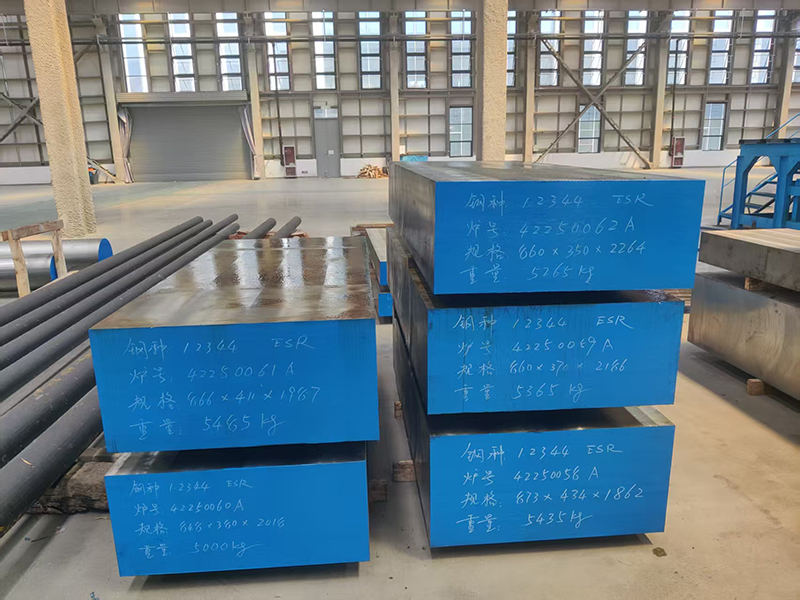
1、 Mechanical performance characteristics
High strength and hardness
The mold needs to withstand high pressure (usually tens to hundreds of megapascals) during the injection molding process, so the steel needs to have high tensile strength (such as yield strength ≥ 800MPa) and hardness (usually annealed hardness ≤ 250HBW, quenched hardness can reach 50-60HRC) to avoid mold deformation or fracture.
For example, the commonly used 4Cr13 steel can achieve a hardness of 52HRC after quenching and can withstand high-strength injection molding pressure.
Good wear resistance
When plastic particles flow in the mold, they will cause friction on the surface of the mold cavity, especially for plastics with fillers such as fiberglass and minerals, the wear is more severe. Mold steel needs to undergo heat treatment (such as quenching and carburizing) to increase surface hardness and enhance wear resistance.
Typical steel grades such as Cr12MoV undergo quenching and tempering treatment to form carbides on the surface, significantly improving their wear resistance.
Sufficient resilience
When the mold is frequently opened and closed and subjected to impact loads, brittle fracture should be avoided. Steel needs to have a certain impact toughness (such as impact energy ≥ 30J), such as pre hardened steel 718H, which has good toughness and is suitable for complex mold structures.
2、 Process performance characteristics
Machinability
The mold needs to be processed by milling, drilling, grinding, etc. The cutting performance is better when the steel hardness is moderate (annealed state 200-250HBW). For example, P20 steel has low cutting resistance after annealing, making it easy to process complex cavities.
Heat treatment processability
Require a wide quenching temperature range, minimal deformation, and good hardenability. For example, H13 steel (4Cr5MoSiV1) has a quenching temperature range of 1020-1050 ℃, and the hardness of the core is uniform after quenching, making it suitable for large molds.
Some pre hardened steels (such as S136) have been heat-treated to 28-35HRC before leaving the factory and can be directly processed to reduce deformation during subsequent heat treatment.
Polishing and etching properties
To obtain high-quality plastic products (such as optical lenses and automotive interior parts), the surface of the mold needs to be polished to a mirror finish (roughness Ra ≤ 0.01 μ m), and the steel needs to have a uniform structure and no inclusions. For example, S136 steel has a high surface finish after polishing and is suitable for electric discharge etching patterns.
3、 Corrosion resistance and wear resistance
Corrosion Resistance
When producing corrosive plastics such as PVC and plastics with flame retardants, mold steel needs to have corrosion resistance. For example, martensitic stainless steel 4Cr13 and 1Cr17Ni2 have a chromium content of ≥ 13% and form a passive film on the surface to resist corrosion from acid and alkali media.
Some mold steels can further enhance their corrosion resistance through surface treatments such as chrome plating and nitriding.
Anti adhesive modulus
Plastic melt is prone to adhere to the surface of the mold, causing difficulty in demolding or surface defects in the product. Steel needs to have low surface roughness and good demolding properties, such as forming a boride layer through boronizing treatment to reduce surface adhesion.